
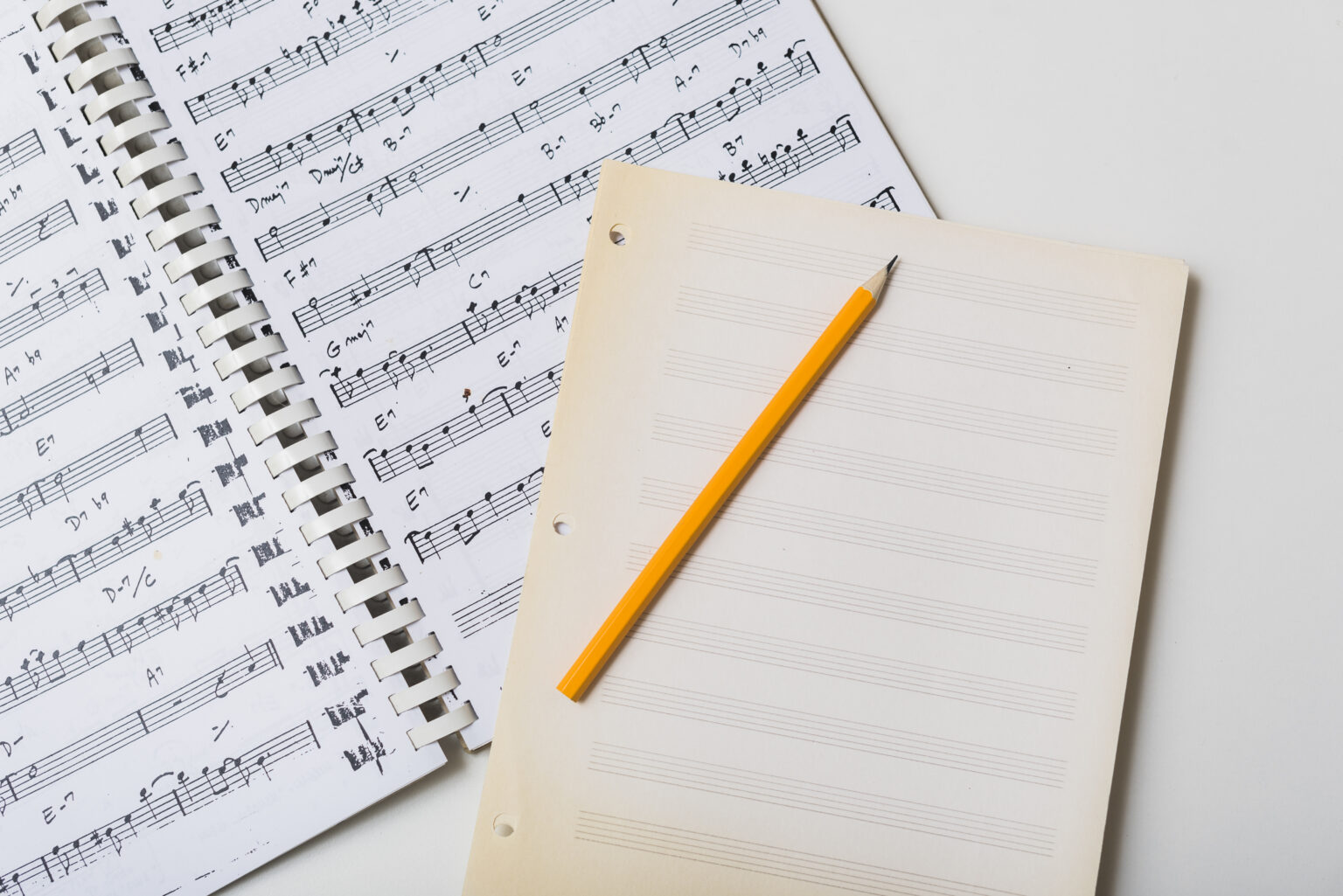
Reading music looks complicated at first. It is really a small set of ideas, used again and again. Here are the basics, in about five minutes.
The stave
Music is written on a stave: five lines with four spaces between them. Each line and each space stands for a different note. The higher a note sits on the stave, the higher it sounds.
The musical alphabet
Notes are named with seven letters: A, B, C, D, E, F, G. After G, the alphabet starts again at A. So the notes go up the stave line, space, line, space, through those seven letters, over and over.
The clefs
A clef at the start of the stave tells you which notes the lines and spaces stand for.
- The treble clef is used for higher notes: the right hand on the piano, and instruments such as violin, flute and trumpet.
- The bass clef is used for lower notes: the left hand on the piano, and the cello.
Naming the notes: treble clef
- Lines, bottom to top: E, G, B, D, F. A common way to remember them is “Every Good Boy Deserves Fruit”.
- Spaces, bottom to top: F, A, C, E. They spell the word FACE.
Naming the notes: bass clef
- Lines, bottom to top: G, B, D, F, A. Try “Good Boys Deserve Fruit Always”.
- Spaces, bottom to top: A, C, E, G. Try “All Cows Eat Grass”.
Middle C
Middle C sits on its own short line, called a ledger line, between the two staves. On the treble stave it is just below the bottom line; on the bass stave it is just above the top line. On the piano it is the C nearest the middle of the keyboard. It is a useful landmark: find it, and count up or down from there.
Practise it
- Draw a stave and write the treble clef line notes. Say the names aloud.
- Pick five notes from a simple piece and name them before you play.
- Do a little every day. Naming notes gets faster with each try.
Learning with a tutor
In Piedbells theory lessons, students learn to read and write notation step by step, from first notes to graded theory. Theory lessons work for beginners and for students who already play.
Further reading
- Rhythm explained: beat, tempo and time signature: beat, tempo and the two numbers at the start of a piece.
- Learning piano at home: a step-by-step guide for beginners: equipment, posture, a routine and first songs.
- musictheory.net: the staff, clefs and ledger lines: a free interactive lesson.
- musictheory.net exercises: free note-naming and rhythm practice.
Ready to start reading music? Book a free 30-minute trial lesson.